
Climate change is one of the most talked-about topics today. You see it in the news, on social media, and in conversations with friends. Many people feel confused or overwhelmed by the information. Is the planet really warming? Are humans causing it? What does it actually mean for everyday life? This article explains the science behind climate change in clear, straightforward language. No complicated formulas. No scary predictions. Just the basic facts that almost every scientist agrees on.
By the end of this lesson, you will understand what climate change is, why it is happening, how we know it is real, and what we can do about it. Let’s start with the foundation.
Climate vs Weather
People often mix up weather and climate. The weather is what happens outside right now. Is it raining? Is it hot or cold today? The weather changes hour by hour and day by day.
Climate is different. Climate describes the average weather pattern over a long period, usually 30 years or more. When scientists say “the climate is changing,” they mean the long-term averages are shifting. Summers become hotter on average. Winters become milder on average. Rain patterns move. These changes happen slowly, but once they start, they affect everything.
Think of it like this: the weather is the mood of the day. Climate is the personality of the region over decades.
How the Internet Really Works – A Simple, Step-by-Step Explanation
Earth’s Natural Temperature Balance
Our planet stays at a livable temperature because of a natural process called the greenhouse effect. Sunlight reaches Earth as shortwave radiation. About 30% bounces back into space off clouds, ice, and bright surfaces. The rest gets absorbed by land, oceans, and the atmosphere. The warm surface then sends longwave heat radiation back toward space.
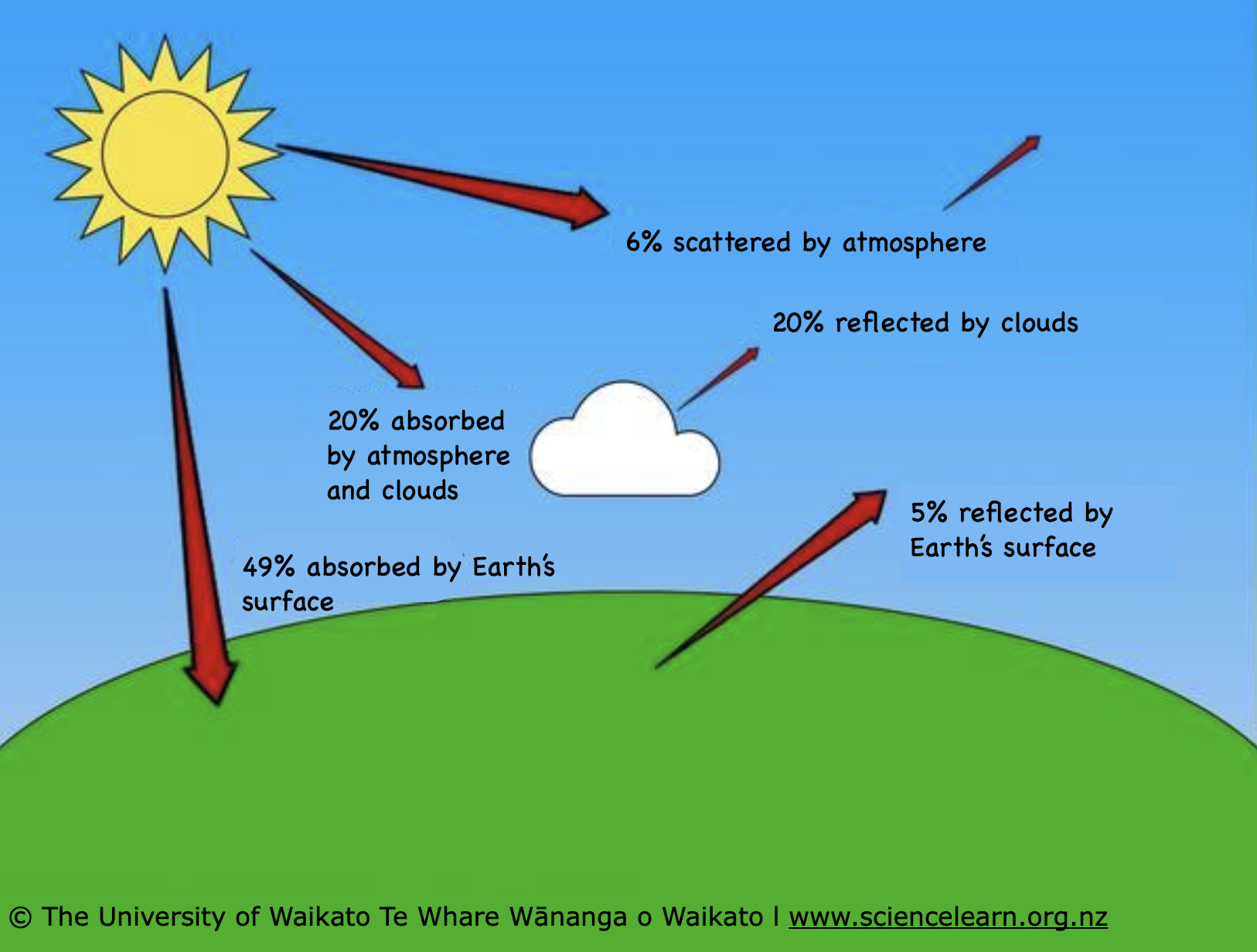
Certain gases in the air, called greenhouse gases, absorb some of this outgoing heat. They trap it and send part of it back down to the surface. This extra warmth keeps Earth about 33 °C warmer than it would be without an atmosphere. Without the greenhouse effect, the average temperature would be around –18 °C. We would have a frozen planet.
The main natural greenhouse gases are water vapor, carbon dioxide (CO₂), methane (CH₄), and nitrous oxide (N₂O). Water vapor is the most abundant, but humans do not directly control its amount. The other three gases are the ones we can influence.
How Humans Are Changing the Balance
Since the Industrial Revolution (around 1750–1800), people have added large amounts of greenhouse gases to the atmosphere. The biggest culprit is carbon dioxide. We release CO₂ mainly by burning coal, oil, and natural gas for energy, transportation, and industry.
Before the Industrial Revolution, atmospheric CO₂ stayed around 280 parts per million (ppm). In early 2026, the level was over 425 ppm. That is a 50% increase in less than 250 years.
Methane levels have more than doubled. Methane is much stronger than CO₂ at trapping heat, even though there is less of it. It comes from livestock digestion, rice paddies, landfills, natural gas leaks, and thawing permafrost.
Nitrous oxide comes mostly from nitrogen fertilizers in agriculture. It is long-lived and very effective at trapping heat.
Deforestation makes the problem worse. Trees absorb CO₂ during photosynthesis. When forests are cut or burned, that storage capacity disappears, and stored carbon is released back into the air.
How Hackers Really Think and Simple Ways to Stay Safe Online
How Do We Know It Is Happening?
Scientists do not rely on one measurement. They use many independent lines of evidence.
- Direct temperature records Thermometers around the world show that the global average surface temperature has risen about 1.1–1.2 °C since the late 1800s. The ten warmest years on record have all occurred since 2014.
- Satellite measurements Satellites measure the energy Earth receives from the Sun and the energy Earth sends back to space. They confirm less heat is escaping to space, exactly what we expect when greenhouse gases increase.
- Ocean heat content. More than 90% of the extra heat is stored in the oceans. Ocean heat content has increased dramatically since the 1970s.
- Ice cores, tree rings, and corals. These natural archives show that current warming is faster and larger than any change in the last 2,000 years.
- Glacier retreat and ice-sheet loss. Mountain glaciers are shrinking almost everywhere. Greenland and Antarctica are losing ice mass every year.
- Sea-level rise. The global mean sea level has risen about 21–24 cm since 1880. The rate is accelerating.
- Shifts in plant and animal ranges. Species move poleward or to higher elevations. Spring events (blooming, migration) happen earlier.
All these signals point in the same direction: the planet is warming, and the warming matches the rise in human-caused greenhouse gases.

See this graph. It plots temperature over time. The line goes up sharply after 1950. This matches industrial growth
How Much Warmer Will It Get?
Scientists use computer models to project future warming. These models include physics, chemistry, and biology. They test the past climate to make sure they work correctly.
If we continue current trends (high emissions), the global temperature could rise 3–5 °C by 2100 compared to pre-industrial levels. Even if we cut emissions sharply, warming of 1.5–2 °C is very likely.
Every half-degree matters. At 1.5 °C, many coral reefs disappear. At 2 °C, far more ice melts, heat waves become deadly in many places, and crop yields drop in tropical regions.

This infographic lists key impacts. It shows rising seas, extreme weather, health risks, and more. All link back to warming.
What Climate Change Looks Like in Everyday Life
Rising temperatures change familiar patterns.
- Heat waves last longer and reach higher peaks.
- Heavy rain events become more intense (more water in the atmosphere).
- Droughts in dry areas become more frequent and severe.
- Hurricanes and typhoons carry more rain and stronger winds.
- Snow seasons shorten, affecting winter sports and water supply from melting snow.
- Mosquitoes and ticks expand their range, bringing diseases to new areas.
Food production suffers when heat stresses crops or when floods destroy fields. Fisheries shift because fish move to cooler waters. Coastal communities face higher storm surges and permanent flooding.
Transform Your Health With A Personalized Wellness Program.
We Are Not Powerless
The good news is that we understand the problem well enough to act.
- Move away from fossil fuels. Solar power, wind power, and hydropower are already cheaper than coal in most places. Battery storage improves every year.
- Improve energy efficiency. Better insulation, LED lights, efficient appliances, and electric vehicles reduce demand.
- Protect and restore forests. Trees absorb CO₂. Stopping deforestation and planting new forests removes carbon from the air.
- Changing diets and farming, eating less beef, and wasting less food cut methane and land use.
- Price carbon. Carbon taxes or cap-and-trade systems make polluters pay. The money can fund clean energy or help low-income households.
- Adapt where we cannot prevent. Build sea walls, plant mangroves, and improve early-warning systems for heat and floods.
Individuals can help too. Use public transport, eat more plants, waste less energy, support green policies, and talk to others. Small actions multiply when millions do them.
Why Accurate Information Matters
Misinformation spreads fast. Some people claim climate change is natural or a hoax. The scientific community thousands of researchers from every continent, has studied this for decades. Their conclusions are consistent; human activity is the dominant cause of recent warming.
Understanding the basic science helps you separate facts from opinions. You do not need a PhD to grasp the core ideas. Sunlight comes in. Heat tries to leave. Extra gases trap more heat. Earth warms. Weather patterns shift. That simple chain explains most of what we observe.
Climate change is not about saving the planet. The planet will survive. It is about protecting the stable conditions that allow human civilization to thrive. We have the tools and knowledge to limit the damage. The question is whether we choose to use them quickly enough.
Take one small step today. Learn more. Reduce waste. Talk to someone else about what you read here. Every conversation moves the needle.
Short Videos & Explainers
- NASA – What is the Greenhouse Effect? (2-minute video). Quick, animated explanation of the greenhouse effect.
- BBC – Climate Change: The Facts (5-minute summary video). (or search “BBC Climate Change The Facts” on YouTube) Easy-to-follow summary narrated by David Attenborough.
- Our World in Data – CO₂ and Greenhouse Gas Emissions. Beautiful charts and interactive graphs showing historical emissions, sources, and trends.