TALLINN — For four days in March, the future of global education was being written in the classrooms of Estonia. From March 8 to 11, Tallinn served as the host city for the International Summit on the Teaching Profession (ISTP) 2026, an exclusive gathering that brought together education ministers, teacher union leaders, and policy makers from nearly 20 of the world’s top-performing education systems.
The summit, organized by the Estonian Ministry of Education and Research in cooperation with the OECD and Education International, focused on the theme “Shifting Gears: Teachers and Students in the Learning Environments of the Future.” The discussions centered on how educators can navigate the rapid technological changes reshaping the classroom, particularly the rise of artificial intelligence.
UK Imposes ‘Emergency Brake’ on Visas from Four Countries
“ISTP taking place in Estonia this year is a great recognition of our education system,” said Estonian Minister of Education and Research Kristina Kallas. “The summit gives us an exceptional opportunity to introduce Estonia’s education and innovation, our schools and culture, to decision-makers from 20 countries. Estonia’s story to the world is our education and digital story – it is unique and worth sharing.”
Andreas Schleicher, the creator of the PISA test and OECD Director for Education and Skills, was on hand to observe the local approach. He noted that while other nations like Japan and France remain cautious about classroom technology, Estonian teachers are integrating AI in “very intentional ways,” thoughtfully considering how technology can support learning rather than undercut the fundamental role of the teacher.
Schleicher also used the platform to argue for a shift in what students are taught. He suggested that prioritizing the memorization of vast amounts of knowledge is becoming obsolete. “If you think about something like science, you need to learn to think like a scientist today,” Schleicher emphasized. “But not necessarily memorize lots of knowledge in physics and chemistry.”
The sentiment was echoed by international delegates who participated in school visits across Tallinn. On Monday, March 9, ministers and delegates visited local institutions, including Tallinn’s Laagna High School. U.K. Minister for School Standards Georgia Gould joined a seventh-grade math class where students were doing a mix of math and coding. “It was really interesting to see how the two were integrated,” she remarked.
Australia Set to Enforce Agent Commission Ban on Onshore International Student Transfers
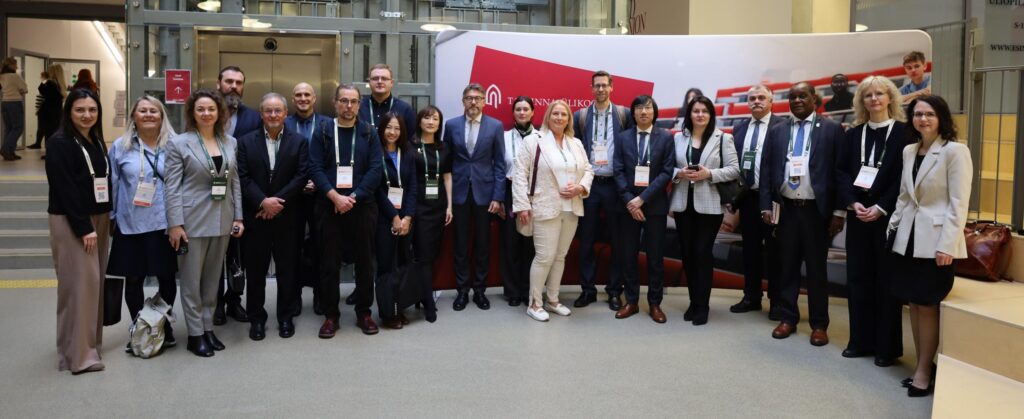
Meanwhile, a separate delegation of 17 education experts, including Ukraine’s Minister of Education and Science Oksen Lisovyi, gathered at Tallinn University to learn how Estonian institutions like the University of Tartu are preparing teachers for this new digital landscape. The focus was on preserving the “role and autonomy of teachers and school leaders” as the primary guarantors of quality in an increasingly digital age.
Perhaps the most striking praise came from Singaporean Minister for Education Desmond Lee, whose own nation consistently tops the PISA rankings. After observing classrooms, Lee pointed not to technology, but to the students themselves. “What struck me was the initiative that the students had,” Lee said, noting how eagerly they raised their hands and helped guide their classmates. He attributed this to the Estonian system’s encouragement of “student agency, student autonomy and a very strong rapport between the teachers and the students.”