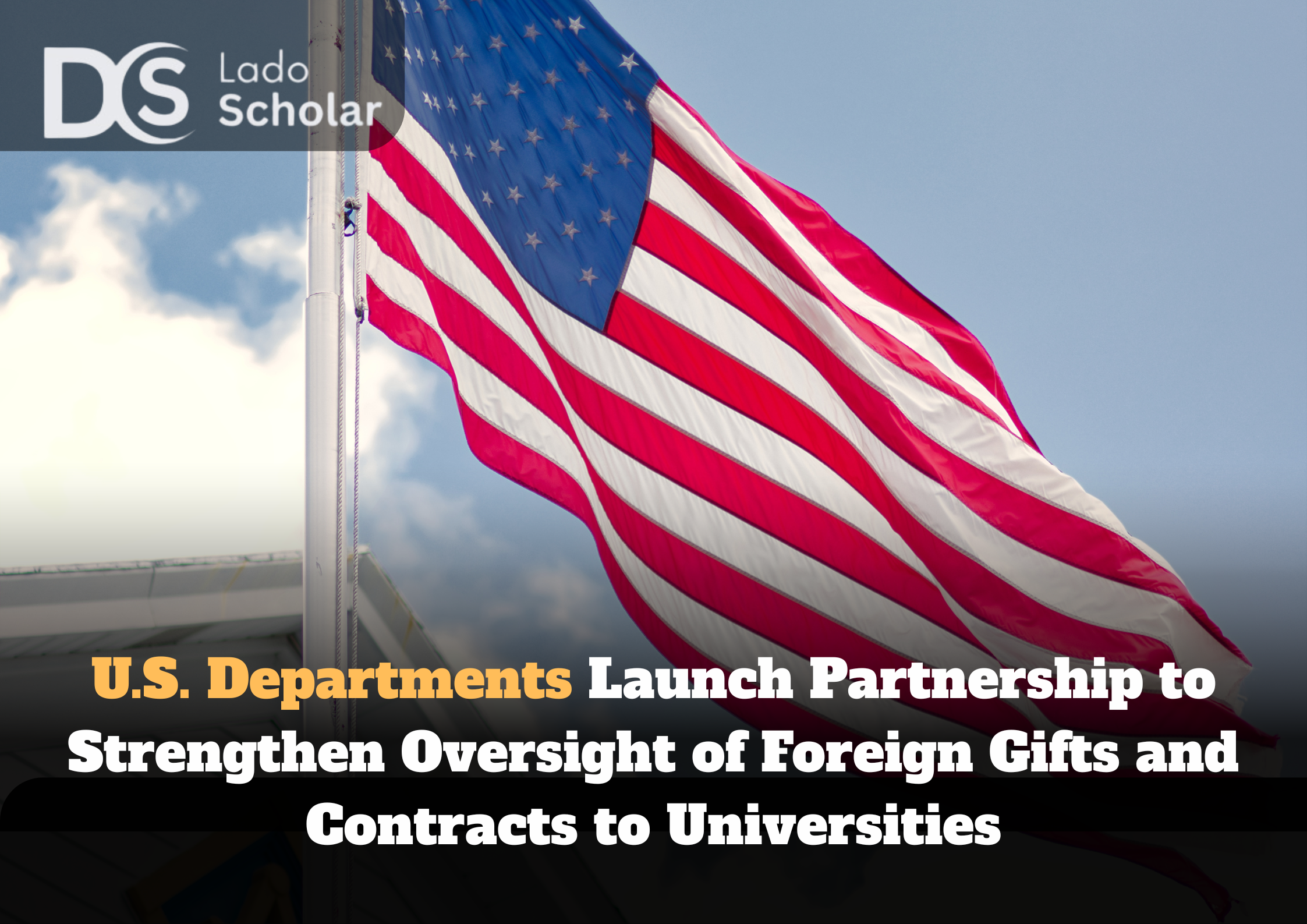
On February 23, 2026, the U.S. Department of Education (ED) and the U.S. Department of State announced a new interagency partnership focused on enhancing the enforcement and transparency of foreign gifts and contracts reported by American colleges and universities under Section 117 of the Higher Education Act of 1965. This collaboration, formalized through an interagency agreement signed by senior officials from both departments, integrates the State Department’s national security and foreign affairs expertise into the management and review of disclosures that U.S. higher education institutions must submit when receiving substantial funding from foreign sources.
Section 117 requires eligible institutions, those offering bachelor’s degrees or higher, accredited by recognized agencies, and receiving federal financial aid, to disclose any gifts or contracts from a single foreign source valued at $250,000 or more in a calendar year. The law aims to promote transparency regarding potential foreign influence on academic programs, research, student admissions, scholarships, or institutional priorities. Disclosures are submitted to ED, which maintains a public portal for inspection of the data. Noncompliance can trigger investigations, civil enforcement actions by the Department of Justice, recovery of enforcement costs, or even loss of eligibility for federal student aid programs under Title IV.
The Great Re-Routing Of Global Business Talent – A New GMAC Report Released
The new partnership builds on ongoing efforts to bolster Section 117 compliance, including a renewed focus following President Trump’s Executive Order 14282 (issued in April 2025), titled “Transparency Regarding Foreign Influence at American Universities.” That order directed improved interagency coordination to protect students, research, and academic integrity from foreign exploitation. The agreement assigns the State Department’s Bureau of Educational and Cultural Affairs (ECA) a supporting role in administering the program.
ED retains primary statutory responsibility and oversight, ensuring no immediate changes to existing reporting guidance or processes for universities. Officials emphasized that the collaboration aims to make reported data more actionable for national security analysis without disrupting routine compliance for institutions. In 2025 alone, universities disclosed over 8,300 transactions totaling more than $5.2 billion in reportable foreign gifts and contracts, contributing to a cumulative total of $67.6 billion since Section 117’s inception in 1986 (with the majority reported since stricter enforcement began around 2019).
This initiative aligns with broader administrative priorities to reorganize federal education functions, including multiple interagency agreements transferring or sharing responsibilities from ED to other departments. The State partnership is one of several announced recently, part of efforts to “break up the federal education bureaucracy” and devolve more authority to states or specialized agencies.
Japan Raises International Student Enrollment Caps at Three National Universities
The announcement follows recent ED actions under Section 117, such as ongoing investigations into several major universities for alleged inaccurate or untimely disclosures, and the release of 2025 data with enhanced public access tools. Universities continue to file biannual reports (due January 31 and July 31, or the next business day), with the portal serving as the central submission and viewing platform.
Primary Sources
- U.S. Department of Education Press Release: “U.S. Department of Education Announces Additional Partnerships to Break Up the Federal Education Bureaucracy” (February 23, 2026) — https://www.ed.gov/about/news/press-release/us-department-of-education-announces-additional-partnerships-break-federal-education-bureaucracy
- U.S. Department of State Release: “State Department Improves Transparency of Foreign Funding in U.S. Higher Education” (February 23, 2026) — https://www.state.gov/releases/office-of-the-spokesperson/2026/02/state-department-improves-transparency-of-foreign-funding-in-u-s-higher-education
- ED/State Section 117 Partnership Fact Sheet (PDF) — https://www.ed.gov/media/document/ed-and-state-section-117-partnership-113294.pdf
- Inside Higher Ed coverage: “ED Partnering With State Dept. to Track Universities’ Foreign Funding” (February 24, 2026) — https://www.insidehighered.com/news/government/politics-elections/2026/02/24/ed-partners-state-dept-track-college-foreign-funds